
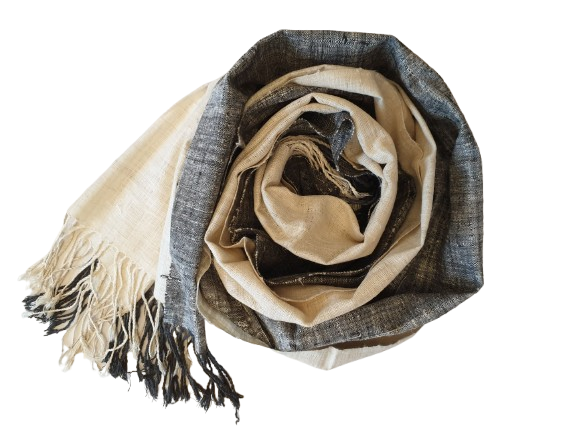
The Loom at Midnight: A Story Woven in Love, War, and Silk
There is a moment in Assam—just before dawn—when the world seems to pause. The birds have not yet stirred. The mist floats gently over the Brahmaputra River. And in that sacred stillness, if you listen…
There is a moment in Assam—just before dawn—when the world seems to pause.
The birds have not yet stirred. The mist floats gently over the Brahmaputra River. And in that sacred stillness, if you listen closely, you may hear something ancient… something enduring.
Khat. Khat. Khat
The quiet rhythm of a loom.
It is not merely sound. It is memory. It is inheritance. It is love—woven into thread.
This is the story of the Kavachkapur, the legendary cloth said to be woven in a single night by Assamese women—so their loved ones could walk into battle… and return home.
A Cloth That Carried More Than Fabric
Legends speak of a time when a woman, upon hearing that her husband must leave for war, would sit at her loom after dusk.
No rest. No pause.
From raw fibre to finished cloth—ginned, spun, woven—all before sunrise.
And when the warrior wore that cloth, it was believed he would never be defeated.
Pause there for a moment.
This is not just folklore about craftsmanship.
This is a civilisation declaring something profound:
That a woman’s hands could create protection stronger than armour.
The Science Behind the Myth
What made the Kavachkapur so powerful was not magic alone—it was material.
Assam’s silks are unlike any other in the world.
- Muga silk — golden, resilient, almost indestructible. It grows stronger with time.
- Eri silk — soft yet powerful, naturally insulating, antimicrobial, and fire-resistant.
Even ancient texts like the Mahabharata reference warriors wearing protective garments made from Assam’s silk traditions.
This was not ornamental weaving.
This was functional protection, born from nature and perfected by human hands.
The Night That Defied Time
To truly understand the legend, you must understand the labour.
Weaving is not a single act. It is a sequence:
- Cleaning and preparing fibre
- Spinning thread
- Setting the loom
- Weaving the fabric
Even today, this takes days.
But Assamese women—trained from childhood, guided by instinct, rhythm, and memory—were said to complete it in a single night.
Not because time bent for them.
But because skill, necessity, and love converged into something extraordinary.
Where Craft Was a Civilisation’s Backbone
During the Ahom era, weaving was not a hobby. It was a strategic resource.
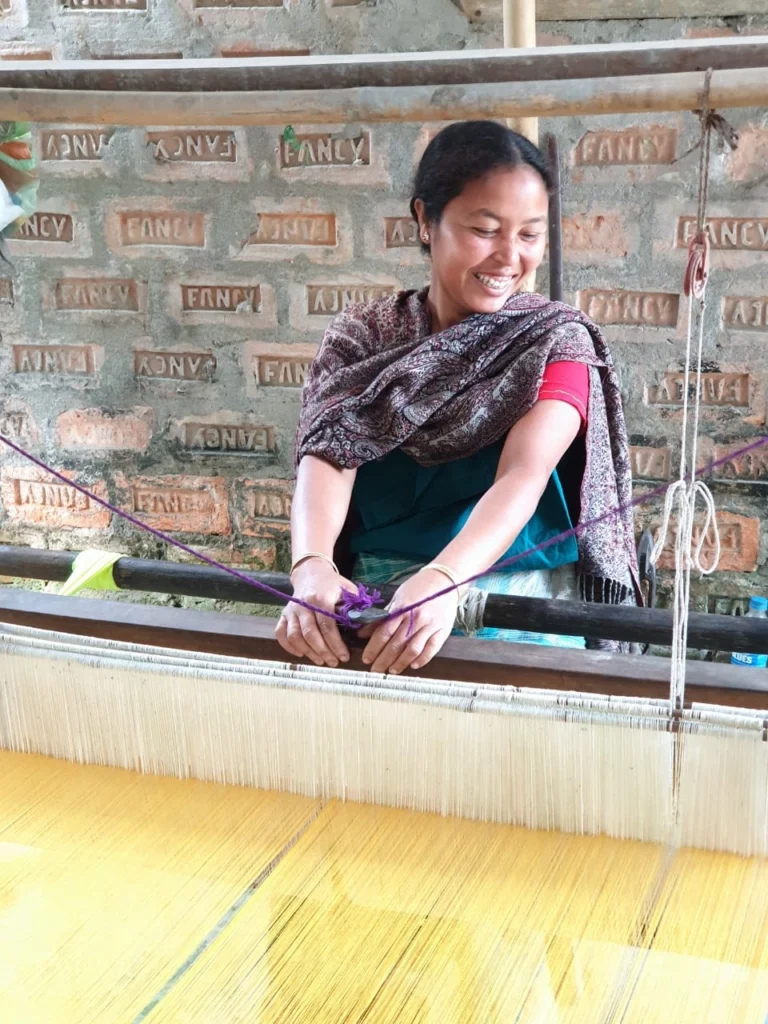
Every household had a loom. Every woman was a weaver.
Under the administration of Momai Tamuli Barbarua, spinning yarn was not optional—it was expected. The state understood something modern economies are only rediscovering:
Textile is power.
And in Assam, that power lived in the hands of women.
The Ritual of Protection
Before beginning, offerings were made to the divine—especially to Bohakarami Ai, the goddess of craft.
The loom was not just a tool. It was sacred.
Every thread carried intention: a prayer for safety, a hope for return, and a silent conversation between two hearts
Motifs woven into the cloth—birds, flowers, celestial patterns—were not decorative.
They were symbols of protection, fate, and return.
A Legacy the World Could Not Ignore
Centuries later, Assam would astonish the world again with the Vrindavani Vastra, a masterpiece of storytelling through textile.
And in 1946, when Mahatma Gandhi visited Sualkuchi—the silk village of Assam—he witnessed something unforgettable.
He saw cloth so finely woven that even the smallest details of a human face could be captured.
And he said:
“Every woman of Assam is a born weaver, who can weave dreams into fabric.”
He wasn’t being poetic.
He was stating a fact.
From War Cloth to Love Cloth
Today, the Kavachkapur may no longer be woven for war.
But its spirit lives on.
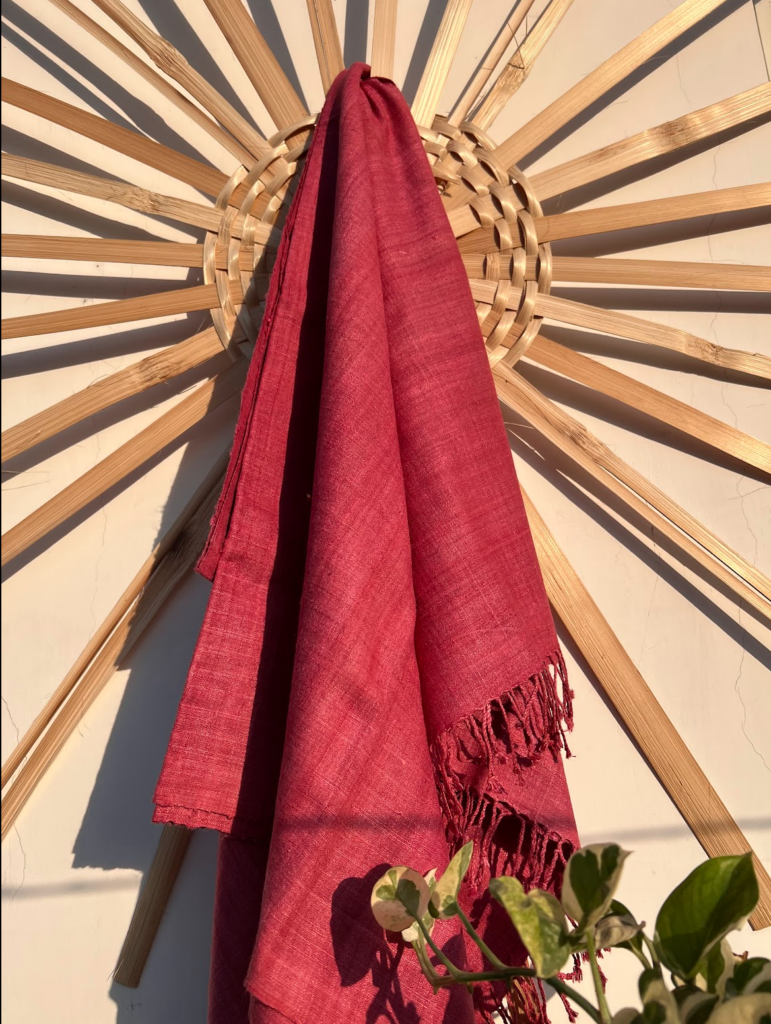
Every Bihu, a young woman gifts a gamosa—a handwoven cloth—to her loved ones.
A simple gesture, perhaps.
But within it lies the same message:
“I made this with my hands. Wear it. Be protected. Come back.”
The Philosophy of Slow Fashion, Rooted in Assam
At Yarn Glory, we believe slow fashion is not a trend.
It is a return.
A, return to conscious creation, emotional value, and human connection.
The story of the Kavachkapur reminds us that clothing was never meant to be disposable.
It was meant to carry memory, identity, and love.
Machine-made fabric may clothe the body.
But handwoven textiles?
They speak to the soul.
The Loom Still Speaks
Even today, in the villages of Assam—Sualkuchi, Jorhat, Sivasagar—the looms continue.
In the quiet hours before sunrise, women still sit with thread and rhythm.
The world may have changed.
But the essence remains.
Khat. Khat. Khat.
The shuttle moves.
The threads meet.
The story continues.
And somewhere, in every piece of handwoven fabric, a whisper still lingers:
Go safely. Come home.